A life, rightly ordered.
Born in 1098 in the Rhineland, Hildegard was the tenth child of a noble family and, by her own account, offered to God as a “tithe” while still very young. Entrusted to the care of the anchoress Jutta at the monastery of Disibodenberg, she was formed from childhood in the Benedictine rhythm of prayer, work, and study. When Jutta died, the community chose Hildegard as their leader.
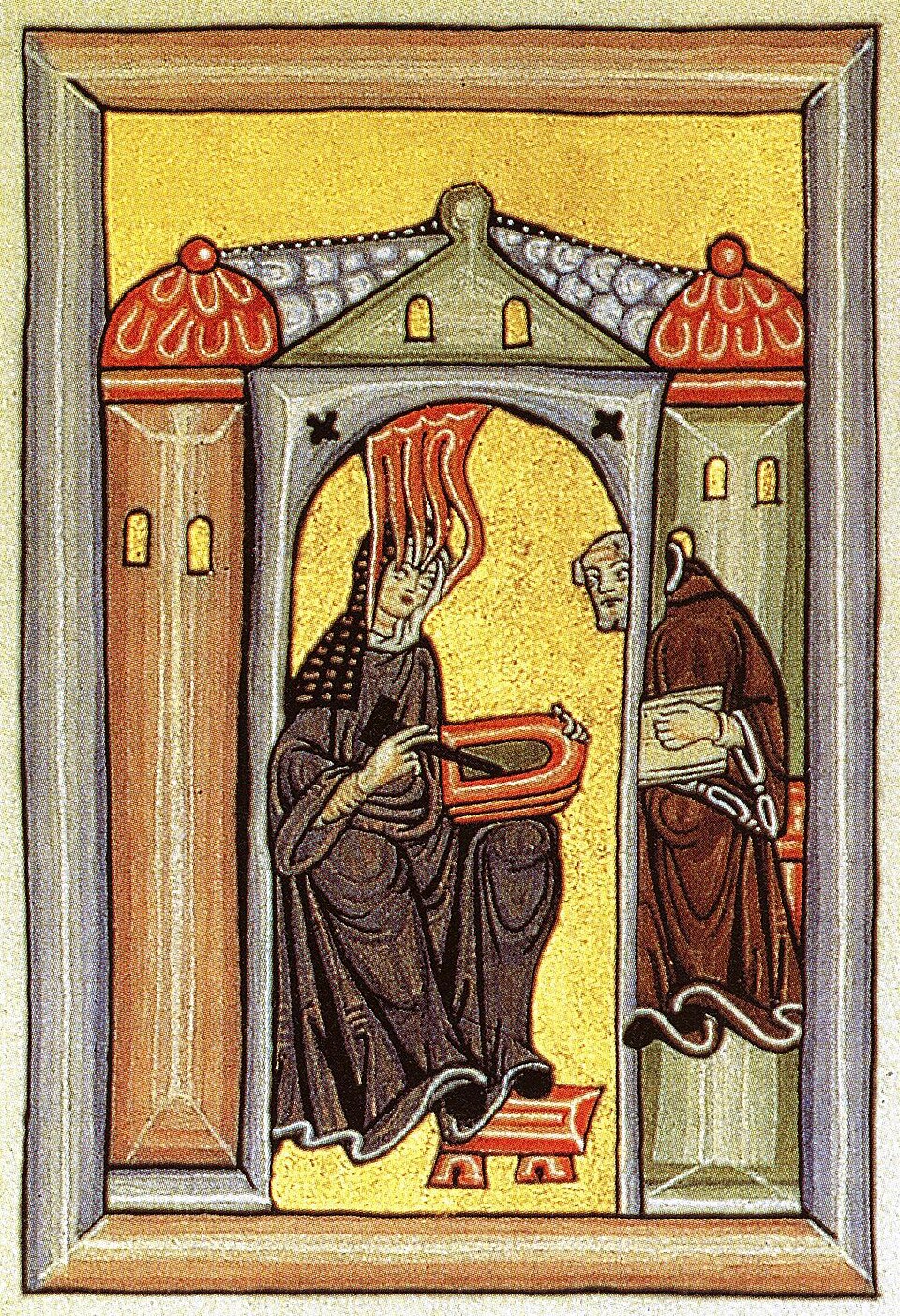
From her earliest years she experienced what she called the “reflection of the Living Light” — luminous visions she received fully awake, with her senses intact. For decades she told almost no one. Only at forty-two, after a command she understood as coming from God — “write what you see and hear” — did she begin, with the encouragement of her confessor and, eventually, the approval of Pope Eugenius III and Saint Bernard of Clairvaux.
The visions & Scivias.
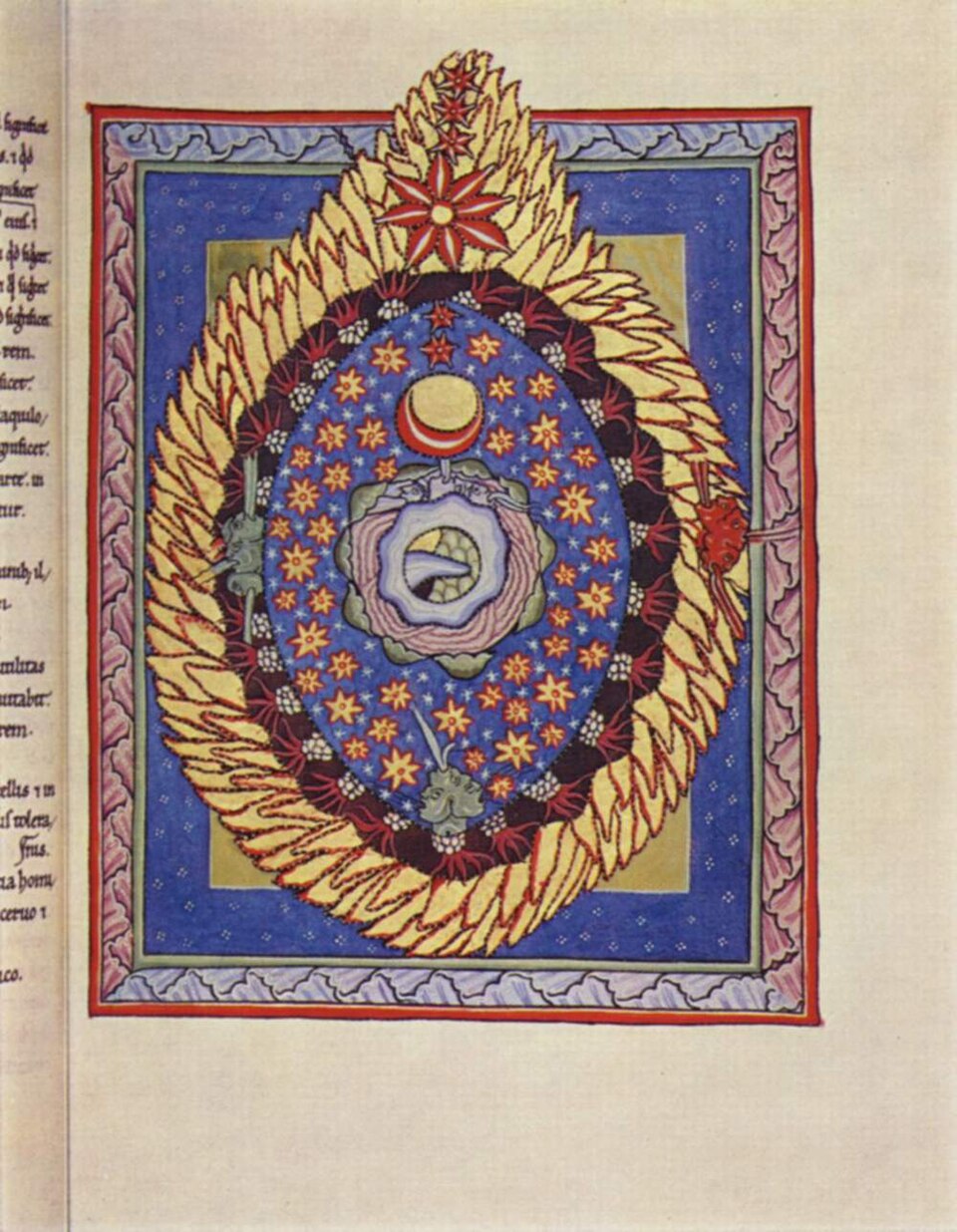
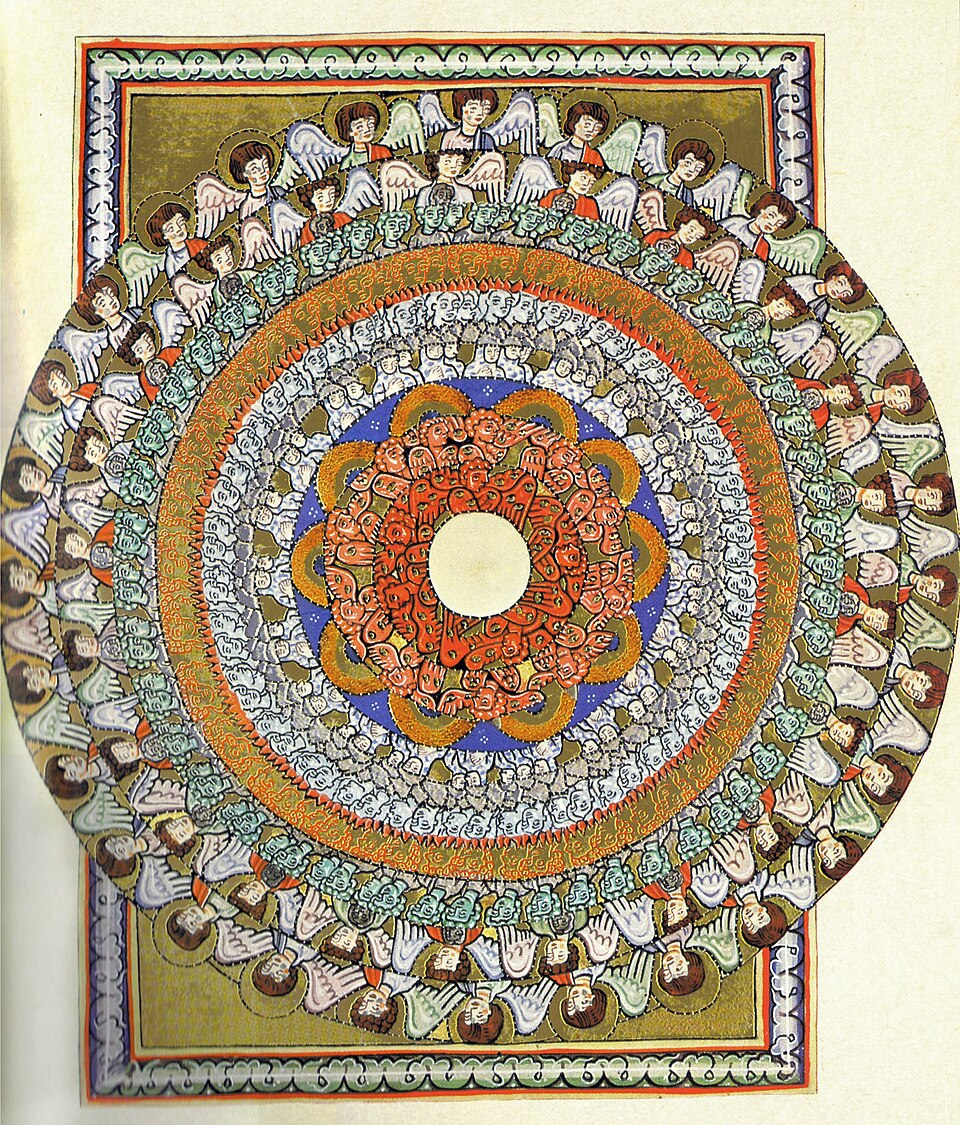
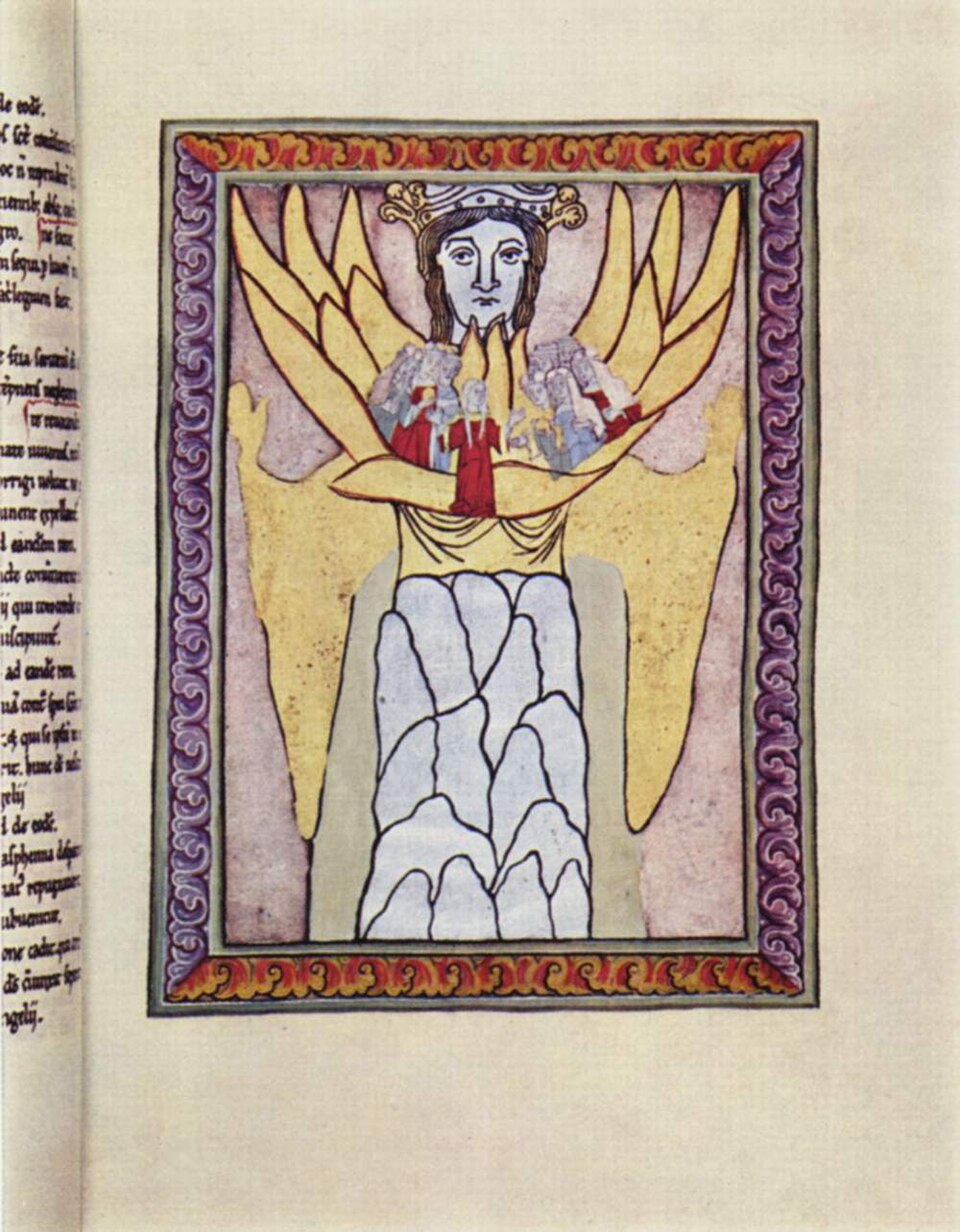
Her first and greatest visionary work, Scivias (“Know the Ways”), took ten years to complete and recorded twenty-six visions of creation, redemption, and the Church. She went on to write two more visionary books, Liber Vitae Meritorum and Liber Divinorum Operum, alongside works on medicine, natural science, and the lives of the saints.
What unites them is a single picture: a universe held in concentric order, everything alive and interdependent, everything turning around God at the center. It is this picture — one center, all things ordered in relation to it — that A New Gift takes as its own.
Viriditas — the greening power.
Hildegard's most original idea is viriditas: the “greenness” or freshness of life, the vitality of the Holy Spirit running through all created things like sap through a branch. To be in right order with God is to be green — fruitful, growing, alive. To be cut off is to dry up.
For a center built around generosity, this is the heart of the matter. Giving, leadership, and service are not duties squeezed from a dry root; they are fruit that overflows naturally when a life is rooted in its source. Seek first the Kingdom, and the greening follows.
Music, healing, and a public voice.
Hildegard composed one of the largest surviving bodies of medieval chant — soaring, unbounded melodies gathered in her Symphonia — and wrote Ordo Virtutum, among the earliest known musical morality plays. She practiced and wrote on medicine and the healing properties of the natural world. In her sixties and seventies she undertook four preaching tours along the Rhine — remarkable for a woman of her age — and corresponded fearlessly with popes, emperors, abbots, and kings.
She founded her own monastery at Rupertsberg, and later a second at Eibingen, leading her sisters in independence from the monks of Disibodenberg — a quiet act of well-ordered courage.
Saint & Doctor of the Church.
Hildegard died on 17 September 1179. Venerated as a saint for centuries, she was formally canonized by Pope Benedict XVI in May 2012; that October he named her a Doctor of the Church — one of only four women to hold that title. Her feast is kept on 17 September.